
Utility Trenching in Garden Plain & South-Central Kansas
Trenches for water lines, electric, gas, fiber, and drain lines to homes, shops, barns, and outbuildings — dug clean and accurate, with every dig starting with a call to 811. Owner-operated.
Who Needs Utility Trenching
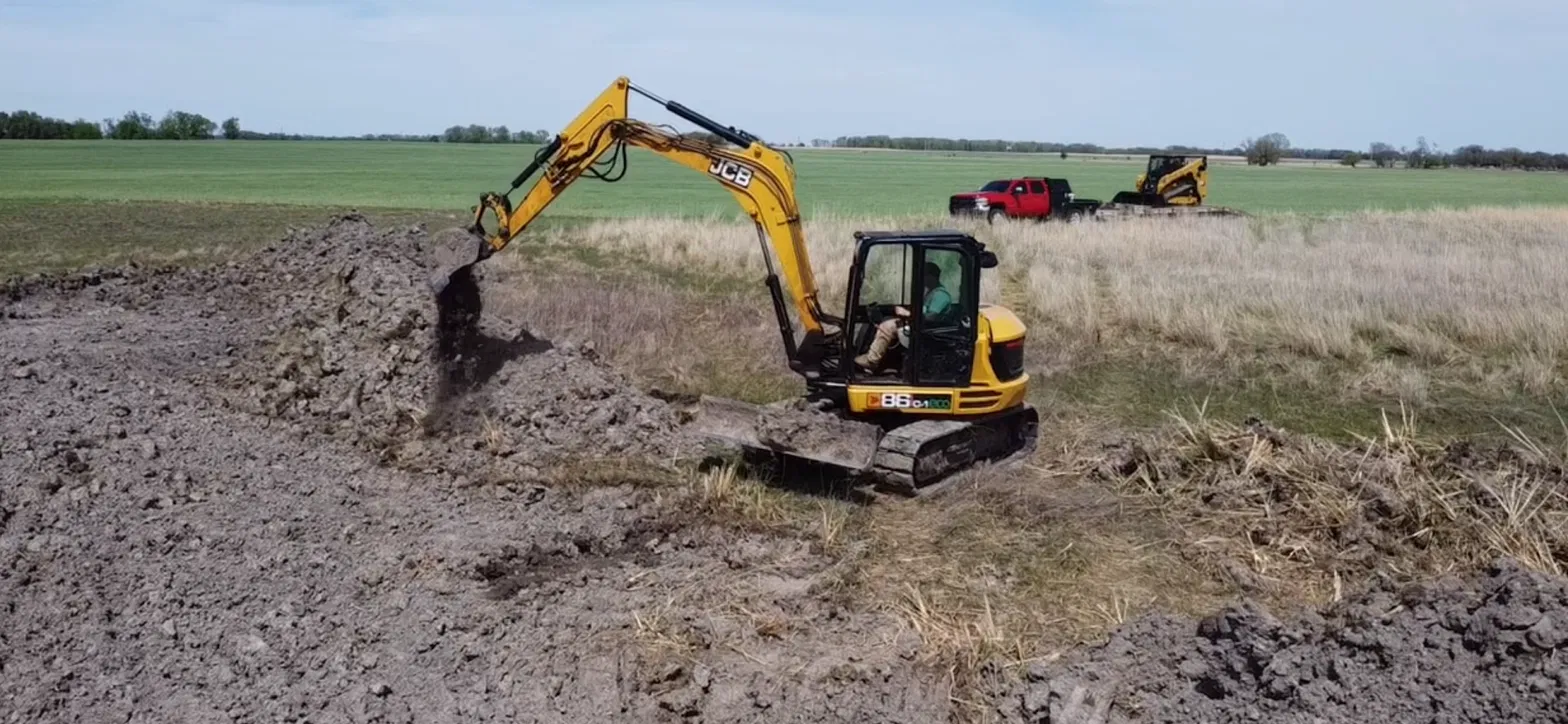
Utility trenching is how water, electric, gas, fiber, and drain lines get from the source to the building. Homeowners running a new water line or electric out to a shop, farmers and ranches bringing power or water to a barn or outbuilding, and builders and developers tying utilities into a new build all need clean, accurate trenches dug to the right depth. Across Garden Plain, Goddard, Cheney, Clearwater, and the rest of south-central Kansas, utility trenching is the link between the utility and the building — and it has to be done right so the line goes in cleanly and the trench closes up properly when the work is done.
Baker Industries is owner-operated, so the person who scopes the trench route is the one running the equipment — you work directly with the owner from the first call to the finished job.
What the Work Includes
Utility trenching covers digging the trench for the line and closing it back up when the work is done. The work we handle includes:
Every Dig Starts With a Call to 811
Every dig in Kansas starts with a call to 811 so buried utilities are marked first. Before any trench is opened, the underground utilities on the route have to be located and marked — hitting a buried gas, electric, or water line is dangerous and expensive, and Kansas 811 is the service that marks them. We treat the 811 call as the required first step on every trenching job, full stop.
For the required notice rules and how the process works in Kansas, see Kansas 811.
Residential Utility Trenching
For homeowners and acreage owners, utility trenching usually means running a line out to a building or bringing a new utility to the house. We dig trenches for water lines, electric, gas, fiber, and drain lines — to a new shop, a detached garage, a well line, or anywhere else a utility needs to reach. If you're building outside Garden Plain, Goddard, Cheney, or Clearwater, trenching is what gets the utilities from the source to the building, and we dig it clean and to the right depth so the line goes in without trouble.
Trenching often runs alongside excavation and grading and site prep on a build — and we can handle all of it as one job.
Farm, Ranch, Commercial & Industrial Trenching
For farms and ranches across Reno, Kingman, Sumner, Harper, and Barber counties, trenching means running utilities out across the property — water to a barn, electric to a pump or outbuilding, or a drain line across a lot. Rural properties often need longer trench runs than town lots, and the owner-operated model means the person who scopes the route is the one digging it, which matters on long runs where the route and depth have to be right the first time.
For commercial and industrial sites, we trench for water, electric, gas, fiber, and drain lines tying utilities into the site, with backfill and compaction when the utility work is done so the ground is closed up properly.
How a Trenching Job Works
Call or Request an Estimate
Reach out by phone or send the job details. You talk straight to the owner.
Call 811 & Mark Utilities
We start with a call to 811 so buried utilities on the route are marked first.
Schedule & Dig
We set a time, dig the trench clean and to the right depth, and stay on route.
Backfill & Clean Up
Once the utility work is done, we backfill and compact and clean up the site.
What Affects the Cost
A trenching estimate is built around the length and depth of the trench and the ground it crosses. The main drivers are:
- Length of the trench — a short run to a shop costs less than a long run across a property.
- Depth of the trench — deeper trenches for certain utilities mean more digging and material handling.
- Soil and ground conditions — rock, clay, or hardpan slow the dig and wear on the equipment.
- Number of buried utilities on the route — more existing lines to work around means more care and time.
- Backfill and compaction — how the trench is closed up and compacted when the utility work is done.
We don't quote a price until we've seen the route. Call (316) 315-9604 or request an estimate and the owner will lay out the trench scope with you.
Utility Trenching FAQ
What utilities do you trench for?
Water lines, electric, gas, fiber, and drain lines to homes, shops, barns, and outbuildings across south-central Kansas.
Do you trench to outbuildings and barns?
Yes. We dig trenches to run water, electric, gas, or fiber out to shops, barns, and outbuildings on rural properties.
Do you backfill trenches?
Yes. We dig clean, accurate trenches and backfill when the utility work is done.
Why does every dig start with a call to 811?
Kansas 811 marks buried utilities before you dig so they aren't hit. Every dig in Kansas starts with a call to 811 — it's the required first step before any trenching.
How deep are utility trenches?
Trench depth depends on the utility and what the local requirements call for. We dig to the right depth for the line being installed.
How do I get a utility trenching estimate?
Call (316) 315-9604 or fill out the estimate form on this page. The owner will review the route and scope of the trench.
Where We Trench
Based in Garden Plain, KS — serving towns across south-central Kansas including Garden Plain, Goddard, Cheney, Clearwater, Kingman, Norwich, Nashville, Conway Springs, and more. We work across Sedgwick, Kingman, Sumner, Reno, Harvey, Harper, and Barber counties.
View Full Service AreaRequest an Estimate
Tell us about the job. Prefer to talk? Call (316) 315-9604.
(316) 315-9604Open 24 hours · Garden Plain, KS